
Prime Minister Shigeru Ishiba's sudden resignation after only a year in office has thrown Japan into political turmoil, raising doubts about how the country will handle economic and regional challenges, observes Dr Rajaram Panda.

The Kalyani Priyadarshan starrer is the kind of incentive superhero origin story that can alter the way such films are made in Malayalam cinema, feels Arjun Menon.

The pace of loan growth among public sector banks (PSBs) has seen a surge in the financial year 2024-25, and this is an exception to the overall moderation in bank credit during FY25. PSU banks' share in incremental credit rose to 57.3 per cent in March from 51.7 per cent a year ago, according to the Reserve Bank of India's (RBI's) Monetary Policy Report (April 2025).

New-age stocks to buy: Most new-age stocks have turned out to be wealth destroyers in stock markets, so far, in calendar year 2025. Shares of Ola Electric Mobility, for instance, have plunged nearly 50 per cent in the first half of CY 2025, while those of Swiggy, PB Fintech, Paytm, and Eternal (Zomato) have crashed between 6 per cent and 25 per cent, ACE Equity data shows.
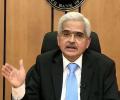
The Reserve Bank of India on Wednesday decided to keep the policy rate unchanged for the tenth time in a row but changed its stance to 'neutral' that may lead to a cut in the forthcoming policies. RBI maintained status quo despite the US Federal Reserve lowering the benchmark rates by 50 basis points last month.
The cumulative rate hikes of 2.5 percentage points by the central bank since May 2022 negatively impacted headline inflation by 1.60 per cent, a paper by senior RBI staffers said on Monday. "Policy rate increases have anchored inflation expectations and modulated aggregate demand, generating disinflationary responses," the paper by Deputy Governor Michael Patra, Indranil Bhattacharyya, Joice John and Avnish Kumar, said.

For nearly two decades, Nitish Kumar has cultivated women as a distinct constituency. 'To create a broader vote base, he thought it would be better to bring women to electoral politics.'
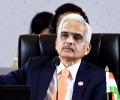
Reserve Bank Governor Shaktikanta Das on Friday said that this stage would have been "premature" and "very very risky" as the retail inflation is still high, and future monetary policy action would depend upon the income data and outlook. Earlier this month, the RBI continued to maintain the status quo in the short-term lending interest rate (repo), citing inflationary concerns, though it changed the monetary policy stance to neutral.

Retail inflation declined to over six-year low of 2.1 per cent in June, nearing the RBI's comfort zone, on account of subdued prices of food items, including vegetables, driven by widespread monsoon.

The Reserve Bank of India on Thursday decided to keep the policy rate unchanged for the ninth time in a row, saying food inflation remains stubborn. The rate increase cycle was paused in April last year after six consecutive rate hikes, aggregating to 250 basis points since May 2022.

Commercial banks in India reported a sixth consecutive year of rise in their net profits in 2023-24 while bad loans continued to fall, according to the Reserve Bank of India's (RBI's) annual publication "Trends and Progress of Banking in India", released on Thursday. "Banks' profitability rose for the sixth consecutive year in 2023-24 and continued to rise in H1:2024-25 with the return on assets (RoA) at 1.4 per cent and return on equity (RoE) at 14.6 per cent," the report said.

Banks have issued Rs 7.78 trillion worth of CDs in the current calendar year until August 2024, compared to Rs 4.9 trillion in the same period of 2023, registering a 59 per cent growth

Titan, Nestle, Hindustan Unilever, State Bank of India, Larsen & Toubro, ITC, Zomato and Bajaj Finserv were also among the laggards. Adani Ports, IndusInd Bank, Tata Motors and HDFC Bank were among the major gainers.

The crisis may not be as visible this time, but the stakes are just as high, points out Rajeswari Sengupta.

'When you have the best market at your doorstep, international diversification is a distraction.'

Zomato emerged as the biggest gainer, followed by Reliance, Nestle, Asian Paints and Power Grid.
Reserve Bank of India (RBI) Governor Shaktikanta Das has said the decision on interest rate moderation will be based on long-term inflation trajectory and not monthly data. The Monetary Policy Committee (MPC) headed by the RBI Governor is scheduled to meet between October 7 and 9 and take call on interest rate. The RBI kept the repo rate unchanged at 6.5 per cent for the ninth time in a row amid risks from higher food inflation.

'LAP is suited for borrowers with a steady income, sound repayment discipline, and a clear repayment plan.'

Saurav Ghosh's step-by-step guide will help you understand what bonds are, how they help investors make money, how much money they make and which bonds to invest in.
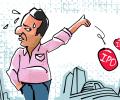
Market watchers link the pullback to underwhelming listing-day performance and the lack of big-name IPOs.

Foreign investment in bonds issued by Indian corporates touched a 10-year high in May at 20,996 crore, driven by $3.35 billion fundraise by the Shapoorji Pallonji (SP) group, which saw infusion from Deutsche Bank, BlackRock, Morgan Stanley, Davidson Kempner, and Cerberus Capital, among others. The SP group sold three-year bonds, offering 19.75 per cent yield compounded annually and payable at maturity.

From the 30 blue-chip pack, Mahindra & Mahindra, IndusInd Bank, Bajaj Finance, Tata Motors, Bajaj Finserv, Nestle and ICICI Bank were the biggest gainers. State Bank of India, Tata Steel, Adani Ports, Zomato, UltraTech Cement and HCL Tech were among the laggards.

One should avoid keeping excessive funds in one's savings account.

From the Sensex firms, Eternal climbed 3.32 per cent. Bharti Airtel, IndusInd Bank, Tech Mahindra, Reliance Industries, Tata Motors, HDFC Bank, Tata Steel and Hindustan Unilever were the other major gainers. However, Bajaj Finserv, Axis Bank, Tata Consultancy Services, Titan and Larsen & Toubro were among the laggards.

A recent World Bank report placing India among the most equal countries globally may present a limited view of inequality, with economists suggesting that broader data sets could tell a different story. According to the report, India's Gini index (or coefficient/ratio), a key measure of inequality, stood at 25.5 in 2022-23, placing the country fourth globally in terms of equality, behind only the Slovak Republic, Slovenia, and Belarus.

The deal fell through over unresolved disagreements over contentious issues, mainly on agriculture and automotive sector tariffs.

From the Sensex firms, Adani Ports, Bajaj Finance, Tech Mahindra, IndusInd Bank, Nestle and Tata Steel were among the major laggards. In contrast, Mahindra & Mahindra, Titan, Larsen & Toubro, Bharti Airtel and Maruti were among the gainers.

'Once bitten, twice shy, I didn't take up the challenge this time...' 'I realised I had failed to follow my karma because I feared failure.'

'AI analyses body language, etiquette, and communication skills, providing an in-depth performance matrix and a ranking system to help employees identify areas of improvement.'

Among Sensex firms, Eternal, Infosys, Tata Consultancy Services, Tech Mahindra, Reliance Industries, Asian Paints, HCL Tech and Adani Ports were the laggards. Power Grid, Bajaj Finance, NTPC, State Bank of India and IndusInd Bank were among the gainers.

Even as competition to garner deposits is intensifying into a tight liquidity and high credit growth scenario, Bank of Baroda (BoB) has hiked deposit rates for the second time in the current quarter. Also, private lender IDBI Bank has come out with a limited period offer on its term deposits. It is offering 7.6 per cent interest rate for a tenor of 700 days, effective from December 2022.

That's the only way to convince those who have money to return to the bank fold, ditching other asset classes, says Tamal Bandyopadhyay.

From the 30-share blue-chip pack, Adani Ports jumped over 5 per cent. NTPC, Tata Steel, Bajaj Finserv, Zomato, Bajaj Finance, Tata Motors, State Bank of India, IndusInd Bank and Maruti were among the other big gainers. From the 30-share pack, Hindustan Unilever, Titan, Tata Consultancy Services, Infosys and UltraTech Cement were the other laggards.

'There is responsibility to make great games that are played by audiences, that fill the gap from an entertainment perspective.'

'We continue to view India as a standout within EM.'

No experts, clearly, were involved in the design of these new tariffs, which have been the subject of bemused wonderment across the world in how completely they ignore logic, rationality, fairness, and economic theory, observes Mihir S Sharma.
The Reserve Bank on Thursday affirmed its commitment to continue with its supervisory measures aimed at early identification of risks and vulnerabilities. The central bank would also focus on enhancing cyber resilience and capabilities of Supervised Entities (SEs) by implementing the recommendations of the inter-regulatory Working Group, which has uniform baseline cybersecurity guidelines for financial entities, it said in its annual report.

The impact of the US Federal Reserve's move to cut the benchmark interest rate will be muted for India as it was mostly priced in, Chief Economic Advisor V Anantha Nageswaran said on Thursday. He said that the Indian stock market is already attracting investor interest and overall the rate cut is positive for emerging markets.

Indian information technology (IT) service providers are expected to deliver low single-digit sequential growth in the first quarter (April-June) of 2025-26 (FY26), even as macroeconomic uncertainties continue to persist due to the volatile geopolitical environment.

Errors in filing income-tax returns frequently lead to scrutiny notices, additional liabilities, or delayed refunds.
 © 2026 Rediff.com - Advertise with us - Disclaimer - Privacy Policy - Sitemap - Feedback - About us - Terms of use - Grievances